
Liposomal Vitamin C: Why Is Its Absorption Several Times Higher Than Regular Vitamin C?
Vitamin C (L-ascorbic acid) is an essential water-soluble vitamin for the human body. It plays an irreplaceable role in collagen synthesis, carnitine metabolism, catecholamine production, dietary iron absorption, immune cell protection, and wound healing.
However, vitamin C faces major challenges: poor stability, susceptibility to intestinal degradation, and low bioavailability . The actual utilization rate of traditional oral vitamin C in the body is far lower than expected.
So, is there a way to truly improve the absorption efficiency of vitamin C? The answer is: Liposomal Vitamin C .
What Is Liposomal Vitamin C?
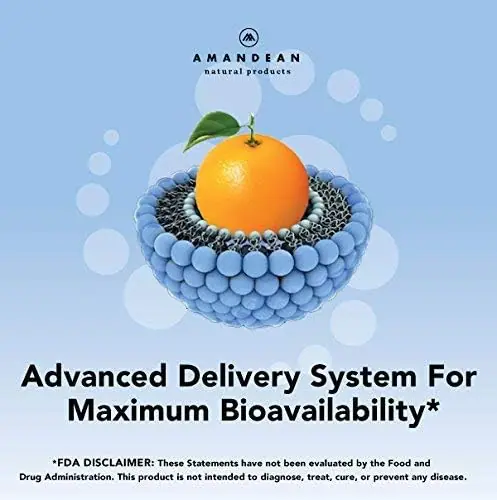
Liposomal vitamin C encapsulates vitamin C inside a lipid bilayer vesicle composed of phospholipids and cholesterol. This structure closely resembles human cell membranes, giving liposomes excellent biocompatibility.
The bilayer structure of liposomes can:
- Protect vitamin C from being destroyed by gastric acid and digestive enzymes;
- Deliver it intact to the small intestine for efficient absorption by cells and tissues;
- Carry both water-soluble and fat-soluble ingredients simultaneously for synergistic delivery.
Simply put, liposomes act as "microscopic transport vessels" that safely deliver vitamin C to where it needs to go.
Scientific Studies Confirm: Liposomal Vitamin C Significantly Increases Absorption Study 1: Published in the European Journal of Nutrition (2024)
A randomized, double-blind, placebo-controlled, crossover trial (27 healthy adults, single 500 mg dose) compared:
- Regular vitamin C (standard ascorbic acid)
Conclusion: A 500 mg dose of liposomal vitamin C increased total plasma exposure by 21% and peak concentration by 27% compared to the same dose of regular vitamin C. Vitamin C levels in leukocytes were also significantly elevated.
Why Choose Liposomal Vitamin C?
Key Findings from the Review Study (2025)
- 9 out of 10 studies showed higher bioavailability for liposomal vitamin C compared to regular vitamin C.
- Liposomal vitamin C increased Cmax (peak plasma concentration) by 1.2–5.4 times versus regular vitamin C.
- AUC (total exposure over time) increased by 1.3–7.2 times compared to regular vitamin C.
Although the studies varied in liposome formulations, vitamin C doses (0.15–10 g), and sampling times (4–24 hours), the vast majority consistently confirmed that liposomal vitamin C has significantly higher absorption than regular vitamin C .
Liposomal vitamin C is not simply "vitamin C + liposomes." It is a scientifically validated delivery system upgrade . By using a biomimetic membrane structure, it protects vitamin C, increases absorption, prolongs duration of action, and ultimately achieves higher utilization efficiency in the human body .
If you are looking for a truly effective, clinically supported vitamin C product, liposomal vitamin C is a trustworthy choice.
How to read the vitamin C absorption figures already published
A buyer comparing liposomal vitamin C will meet more than one percentage on this website, and those percentages do not measure the same thing. This article already summarizes a randomized, double-blind, placebo-controlled crossover trial published in the European Journal of Nutrition in 2024: 27 healthy adults, a single 500 mg dose, total plasma exposure 21 percent higher, peak concentration 27 percent higher, and higher vitamin C in leukocytes than the same dose of regular vitamin C. Those figures belong to that trial. They are not a Sheerdds batch assay, and they are not a statement that every later lot will reproduce the same plasma curve.
The review findings already listed above are a second source. Nine of ten studies in that 2025 review found higher bioavailability for liposomal vitamin C than for regular vitamin C. Reported Cmax ratios ran from 1.2 to 5.4 times, and reported AUC ratios ran from 1.3 to 7.2 times. The same paragraph records that the studies did not share one liposome formulation, that doses ranged from 0.15 g to 10 g, and that blood was sampled over 4 to 24 hours. A wide ratio across unlike trials is a reason to read the formulation under test. It is not a single number to print on a label as if Sheerdds had measured that range on one powder.
The liposomal vitamin C powder page is a third source. It states that regular oral vitamin C has an absorption of about 12–14 percent and that high doses often cause gastrointestinal discomfort. It states that the liposomal powder uses a phospholipid bilayer, reaches a bioavailability of over 80 percent, and is gentler on the stomach. Other sentences on that page say "90% absorption" and "3-5x efficacy." Those are catalog sentences. They are not the 21 percent and 27 percent results from the 2024 trial, and this article does not convert one set into the other. A label draft that places "over 80 percent," "90 percent," and "21 percent" in the same sentence is mixing the powder page with the trial.
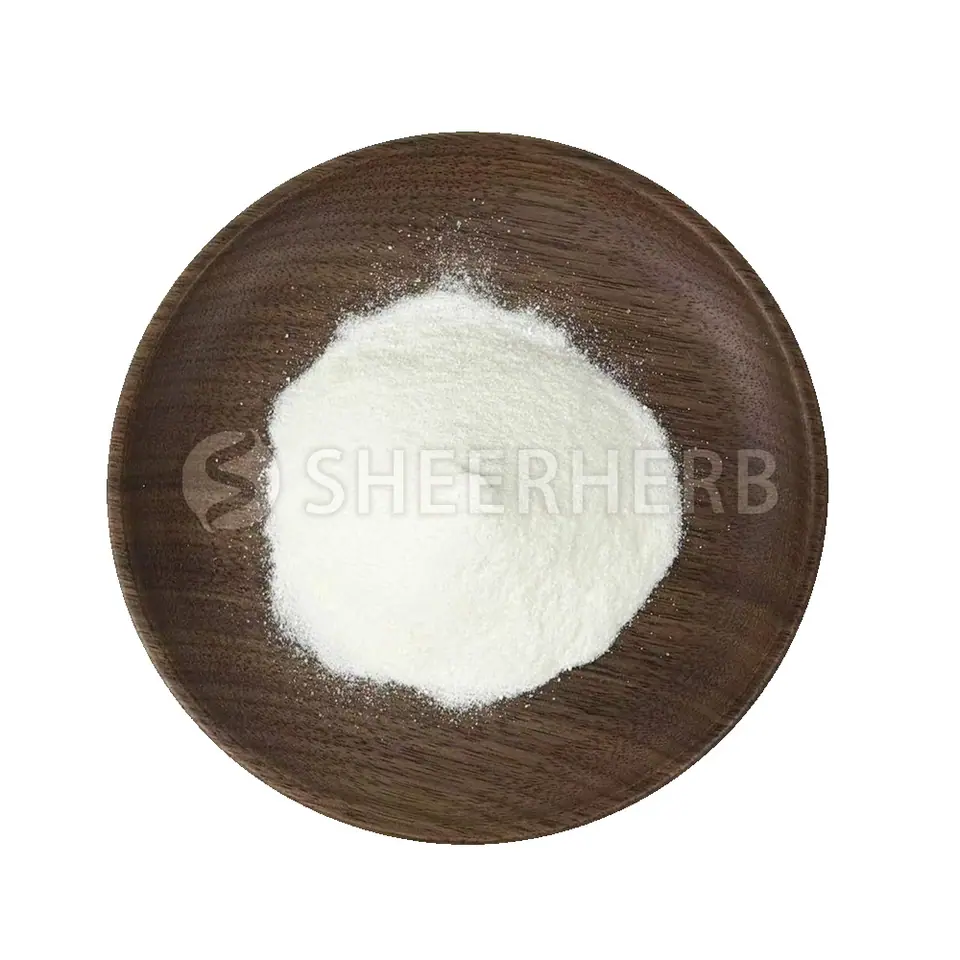
What the liposomal vitamin C powder page already states
The powder page is the catalog record for the ingredient Sheerdds offers. It describes the technology as liposomal encapsulation in a nano-phospholipid bilayer. For registration support it lists a COA, a specification sheet, stability data, and a nutritional panel. Heavy metals are described as compliant with USP and EP standards. The page also describes three levels of testing on each batch: in-process quality control, a full laboratory analysis before release, and an annual third-party type test. The parameters named there are encapsulation efficiency of at least 85 percent, particle-size distribution, peroxide value, microbiology, and heavy metals. Retain samples are kept for 2 years.
On particle size and storage, the powder page states an average of 100–150 nm measured by dynamic light scattering, inside the range it calls standard for nano-liposomes. It states a shelf life of 24 months in a cool, dry place, with less than 5 percent variation in particle size and encapsulation efficiency over that life. Those storage and size sentences are powder-page statements. They are not results from the 2024 crossover trial, which does not report a nanometer size or a 24-month variation figure. When a filing needs the size of the lot you will buy, ask sales for the particle-size report that accompanies that lot.
On use, the powder page says the powder tastes slightly bitter because of the phospholipids and the vitamin C. It says the powder can be mixed into water, juice, yogurt, or a smoothie, placed on the tongue and swallowed with water, or filled by the customer into vegetarian capsules. It says to avoid heat above 40°C (104°F) so the emulsion does not break down. Free samples are 100–500 g. The customer pays international courier shipping of about USD $30–50. Each sample includes a COA and a particle-size report so the buyer can check solubility, taste, and room-temperature stability after it arrives. This article does not add a different sample weight or a different shipping figure.
Why an ordinary dose leaves unused vitamin C
The opening of this article lists roles that depend on vitamin C: collagen synthesis, carnitine metabolism, catecholamine production, absorption of dietary iron, protection of immune cells, and wound healing. Those roles describe why the vitamin is in a formula. They do not describe how much of an oral dose reaches plasma. Vitamin C is water-soluble. The powder page states that regular oral vitamin C is absorbed at about 12–14 percent and that a high dose often irritates the gut. Milligrams that never cross the gut wall do not become a higher plasma level merely because the capsule was filled with more powder. That is the practical reading of "less waste" in the title of this article: more of the weighed dose has to survive the stomach and reach an absorptive surface.
The delivery description already published on this page is the route the catalog offers around that limit. Liposomal vitamin C is described as vitamin C inside a bilayer vesicle of phospholipids and cholesterol, a structure compared with human cell membranes. The bilayer is described as protecting vitamin C from gastric acid and digestive enzymes, carrying it to the small intestine, and holding water-soluble and fat-soluble material in one particle. The powder page adds that a phospholipid layer can keep the vitamin intact as far as the small intestine, that lymphatic uptake is described as bypassing the liver, and that the liposome is described as delivering vitamin C into cells. Those are mechanism sentences from the two pages. They tell a formulator why a liposomal powder is worth a bench test. They are not a new Sheerdds pharmacokinetic table, and they do not replace the COA for the lot.
What to send when you ask for a factory quote
Sheerdds manufactures liposomal ingredients in Xi'an for pharmaceutical, health food, and cosmetics brands. A first message that sales can answer names liposomal vitamin C powder, the destination market, the quantity band, and the dosage form you have in mind, such as a drink or a capsule. Sales then confirms the COA, the assay, the pack size, for that request. This page prints none of those three as a standing number. Trial / sample production MOQ is 1 kg, commercial orders start at 100 kg minimum, and the standard lead time is approx. 7 days (it may vary for large or custom OEM orders). The page does not print a price, and it does not promise a clock time for the reply. A quote is not an order. Supply starts after specification, quantity, price, and delivery are confirmed in writing.
Documents for a market filing are a separate request from the ingredient price. The certificates page shows the scans, and the date under each scan is the date printed on that document. The ISO 9001 scan prints valid until 21 December 2025. The ISO 22000 scan prints valid until 18 December 2025. The IFANCA halal scan prints valid until 31 December 2021. The MUI halal scan prints valid until 31 October 2023. The USDA National Organic Program scan was issued on 27 August 2020, the published file is page 1 of 7, and the scan says to check validity with the certifier. Publishing a scan is not a statement that the certificate is current. Ask sales for the file that matches the lot you are registering.
The same certificates page shows GMP, HACCP, FDA, SGS, and Halal graphics. Those graphics are marks carried over from the previous site, not certificate scans. The SGS mark includes ISO 9001 artwork; it is the SGS mark, not the ISO 9001 scan described above. This article does not repeat any percentage printed inside the Halal mark. Kosher documentation can be requested for registration, and no kosher scan is shown. The homepage says that GMP, ISO, Halal, and Kosher documentation is available for registration. Which of those files matches a given lot is still a question for sales, answered against the lot rather than against a general slogan.
If the same formula also needs iron, use the liposomal iron powder page and the 2026 comparison article. Particle size, encapsulation, the sample shipping figure, and the vitamin C trial percentages on this page are not iron specifications. Assay, pack size, and lead time stay on the document for the lot you name. Keeping the two ingredients in separate files is what lets a registration reviewer see which number came from a trial, which number came from a catalog sentence, and which number came from the COA of the batch you will actually receive.
Talk to the factory
Send the ingredient, quantity, and target market, and sales will follow up with documents and a quote.
- Based in Xi’an, China
- Certificate scans: ISO 9001, ISO 22000, Halal, USDA Organic
- COA & spec sheet on request
- Bulk, OEM & ODM supply
- Trial MOQ 1 kg · Commercial 100 kg
- Lead time ~7 days
- Free samples 100–500 g