
What this 2026 buying note actually compares
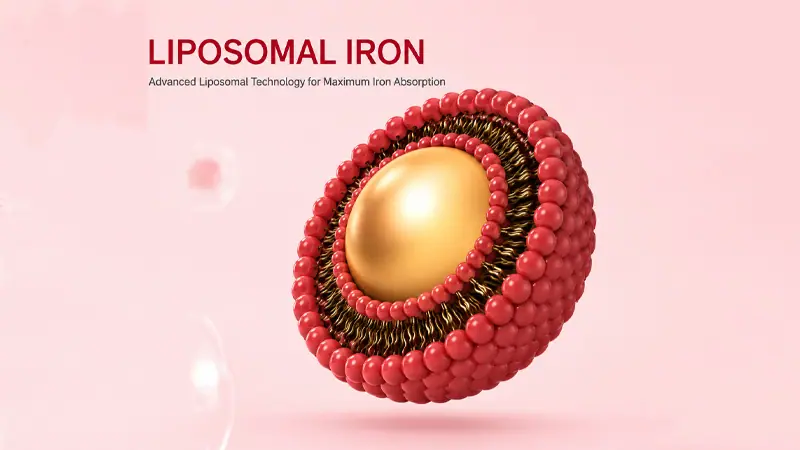
This note is for buyers choosing between two liposomal iron salts. One is ferric pyrophosphate, an iron(III) salt often shortened to LFP. The other is liposomal ferrous iron, iron(II), which the heading already on this page marks as Fe²⁺. The catalog page titled Liposomal Iron does not split every published figure by salt. The photographs shown with that page and with this article are the ferric-pyrophosphate images, while the sentences on the powder page are written for liposomal iron powder as one ingredient. The COA for the lot you register has to name the salt. A figure on the powder page should not be assumed to have been measured on both salts unless the COA says so.
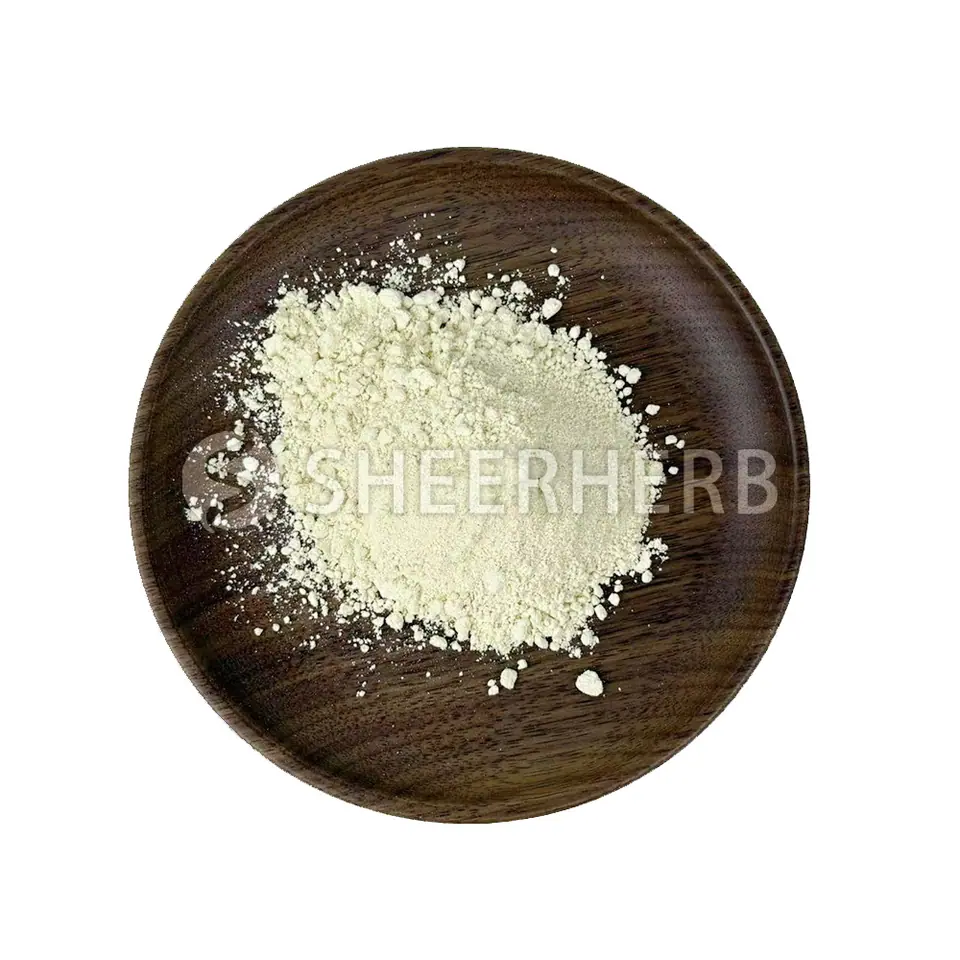
Read the powder page as the catalog description, not as a second clinical paper. It states that a phospholipid bilayer protects iron ions from stomach acid and delivers them to the small intestine. It states that bioavailability is 3–5 times higher than traditional ferrous sulfate, with less gastrointestinal irritation, less metallic aftertaste, and less oxidative stress. The same comparison is also printed on that page as "3–5X." Appearance is a light yellow powder. Iron content is printed as 50%–65% and described as customizable. Technology is named as liposomal encapsulation. Registration support lists a COA, a specification sheet, stability data, and a nutritional panel. Heavy metals are described as compliant with USP and EP standards.
Shelf life on the powder page is stated for the powder against liposomal iron liquid: 18–24 months, and no cold chain, which the page presents as lower storage and shipping cost and as easier packing for cross-border orders. Trial / sample production MOQ is 1 kg; commercial orders start at 100 kg minimum. Free samples (100–500 g) are available for qualified wholesale buyers; the buyer pays international courier shipping (approx. USD $30–50).
The 3–5 times sentence is the powder page's comparison with traditional ferrous sulfate. This article does not add a separate percentage for liposomal ferric pyrophosphate versus liposomal ferrous iron. It does not add elemental iron per gram, a particle size, an encapsulation efficiency, a solubility, or a moisture value. Those fields are named on the powder page as items to request on the technical data sheet. The numbers themselves are not printed in the catalog, and they should not be inferred from the photograph or from the page title.
How to use the buying contexts already on this page
The four points immediately below were already published on this page, ahead of the ferrous heading. Read them as the contexts this note gave for the ferric-pyrophosphate side of the comparison: a premium or medical-grade brand position, customers who report intolerance to conventional iron, a wish to cite clinical studies from 2024 through 2026, and a direct-to-consumer or e-commerce product where tolerance affects reviews and repeat purchase. They are buying contexts. They are not a clinical results table. This article does not attach a new absorption percentage, a study outcome, or a price to any of them. Wanting to cite studies from those years is not itself a summary of what those studies found.
- Brand positioning: "premium" or "medical-grade"
- Customers report intolerance to conventional iron
- Want to leverage 2024–2026 clinical studies as evidence
- DTC/e-commerce where tolerance drives reviews and retention
When to Choose Liposomal Ferrous (Fe²⁺)?
The points under this heading are the contexts already published for liposomal ferrous iron. They name a priority on maximum absorption and efficacy, adults with confirmed iron-deficiency anemia, a competitive price, regulatory filings that call for a long safety record, and cost per serving as a purchasing criterion. They do not state a Sheerdds price, a Sheerdds cost per serving, or a Sheerdds assay for the ferrous salt. The price and the safety file you will actually submit still come from the quotation and from the documents sales sends for that salt.
- Priority is maximum absorption and efficacy
- Target population: adults with confirmed IDA
- Need competitive price point
- Require decades of safety data for regulatory filings
- Cost per serving is a key purchasing criteria
5. Supplier Selection Criteria
5.1 Technical Specifications to Request
Before using the warnings below, ask for the sheet the powder page already names. That page tells the buyer to request milligrams of elemental iron per gram of powder, liposome particle size, encapsulation efficiency, solubility, moisture, and heavy metals, and to take those values from the technical data sheet rather than from a marketing line. This article does not reprint those measurements, because the catalog does not print them. The three items under this heading are the supplier warnings already published beside that request: no raw data for encapsulation efficiency, no batch-consistency file or a stability study shorter than 12 months, and no third-party heavy-metal test. A missing file is a reason to pause the order. It is not a reason to fill the gap with a number this page never published.
- Supplier cannot provide encapsulation efficiency raw data
- No batch consistency documentation or stability study (<12 months)
- No third-party heavy metal testing
6. Regulatory Considerations by Market
Recommendation: For EU market entry with LFP, budget €50k–100k for Novel Food application.
How to read the only budget figure on this page
The €50k–100k range printed in the Novel Food recommendation on this page is the only budget figure in this article. It refers to a Novel Food application for entering the European Union market with liposomal ferric pyrophosphate. It is not a Sheerdds quotation, it is not a Sheerdds filing fee, and it is not a fee stated for any other country. A buyer entering a different market needs counsel for that market. The powder page says the registration pack can include product specifications, a COA, nutritional test reports, stability test reports, and other documents the local filing asks for. Sales confirms which file matches the lot.
Certificate scans are published on the certificates page, and the caption under each scan is the date printed on the document. The ISO 9001 scan prints valid until 21 December 2025. The ISO 22000 scan prints valid until 18 December 2025. The IFANCA halal scan prints valid until 31 December 2021. The MUI halal scan prints valid until 31 October 2023. The USDA National Organic Program scan was issued on 27 August 2020, the file on the site is page 1 of 7, and the scan says to check validity with the certifier. A scan on that page is not a statement that the certificate is current. The file for the lot still has to be requested.
GMP, HACCP, FDA, SGS, and Halal graphics on the certificates page are marks, not scans. The SGS mark is not the ISO 9001 certificate, even where the artwork refers to ISO 9001. This article does not repeat any percentage printed inside the Halal mark. Kosher documentation can be requested for registration. No kosher scan is shown. The homepage says GMP, ISO, Halal, and Kosher documentation is available for registration, and the copy that matches the lot is still requested from sales.
The liposomal iron powder page includes the sentence that the ingredient is safe for pregnant women, children, and sensitive stomachs. That sentence is catalog wording on the powder page. This article does not adopt it as a medical recommendation. A brand that wants a population claim should take the lot COA and the local rules to its own regulatory and clinical counsel before the claim is printed.
7. B2B Frequently Asked Questions
Which salt should the inquiry and the COA name?
Name the salt in the first inquiry, and require the COA to name the same salt. Use the four contexts above the ferrous heading when the brief is a premium or medical-grade position, reported intolerance to conventional iron, a plan to cite studies from 2024 through 2026, or an online product where tolerance affects reviews. Use the ferrous heading when the brief is maximum absorption, adults with confirmed iron-deficiency anemia, price, a long safety record for a filing, or cost per serving. The page title and the photograph are not a substitute for the salt named on the COA. The powder page does not split every figure by salt, so the document has to do that work.
Does the published 3–5 times figure cover both iron salts?
The only comparison the powder page publishes is liposomal iron powder versus traditional ferrous sulfate, at 3–5 times, with less gastrointestinal irritation, less metallic aftertaste, and less oxidative stress. That sentence is not a head-to-head percentage of liposomal ferric pyrophosphate against liposomal ferrous iron. This article does not add one. It also does not publish elemental iron per gram, particle size, or encapsulation efficiency for either salt. Ask for those fields on the technical data sheet of the salt you named, and keep them out of the label until that sheet arrives.
What should the first message to sales contain?
The first message should name the salt, the destination market, the quantity, and whether you need a sample for a qualified wholesale buyer or a production lot. In the same message, ask for the COA, the assay, the pack size, and the lead time. Sheerdds sells from Xi'an. This article does not promise how quickly a reply will arrive. A quote is not an order. Supply starts after specification, quantity, price, and delivery are confirmed in writing.
8. Summary & Decision Matrix
Put the two lists back together this way. The contexts published above the ferrous heading point toward liposomal ferric pyrophosphate when the project turns on brand positioning, reported intolerance to conventional iron, a wish to cite studies from 2024 through 2026, or tolerance in an online store. The contexts under the ferrous heading point toward liposomal ferrous iron when the project turns on an absorption priority, confirmed iron-deficiency anemia in adults, a competitive price, a long safety file, or cost per serving. Neither list is a filled specification, and neither list sets a Sheerdds price.
The powder page remains the catalog description for both conversations until the COA names the salt: a light yellow powder, iron content printed as 50%–65% and described as customizable, phospholipid encapsulation, a 3–5 times comparison with traditional ferrous sulfate, USP and EP heavy-metal wording, and a powder shelf life of 18–24 months without a cold chain. Score the supplier with the three warnings already on this page. Those warnings are missing encapsulation-efficiency raw data, missing batch-consistency documentation or a stability study under 12 months, and missing third-party heavy-metal testing. Leave the €50k–100k sentence attached only to an EU Novel Food discussion for LFP. Leave every measurement that this article does not print on the data sheet for the named salt.
Talk to the factory
Send the ingredient, quantity, and target market, and sales will follow up with documents and a quote.
- Based in Xi’an, China
- Certificate scans: ISO 9001, ISO 22000, Halal, USDA Organic
- COA & spec sheet on request
- Bulk, OEM & ODM supply
- Trial MOQ 1 kg · Commercial 100 kg
- Lead time ~7 days
- Free samples 100–500 g